
OneService Work
Learn how feedback is routed to agencies and Town Councils to address municipal issues.
Last updated 14 September 2026
OneService Work Behind the Scenes
Ever wondered what happens after you submit a case?
Watch the short video below to learn how feedback from the OneService channels is routed to the relevant agencies or Town Councils, and how different parties work together to address the issue.

While many cases can be resolved relatively quickly, some issues are more complex and may take longer to address.
Here are some examples:
HDB Car Park Maintenance
Housing & Development Board (HDB) car park infrastructure requires regular maintenance due to wear and tear. Some requests for improvements may require further technical assessment or feasibility studies, followed by the necessary approvals from the relevant authorities. Examples of HDB car park infrastructure include the Electronic Parking System (EPS), bollards, lifts, signage, kerbs and slabs, and parking lot markings.
Depending on the location, either HDB or the Town Council may maintain, repair or improve the infrastructure. They work closely with contractors to assess the problem, identify suitable solutions, and carry out the necessary repairs.
The time needed to resolve such cases may vary depending on the nature of the feedback and the complexity involved.
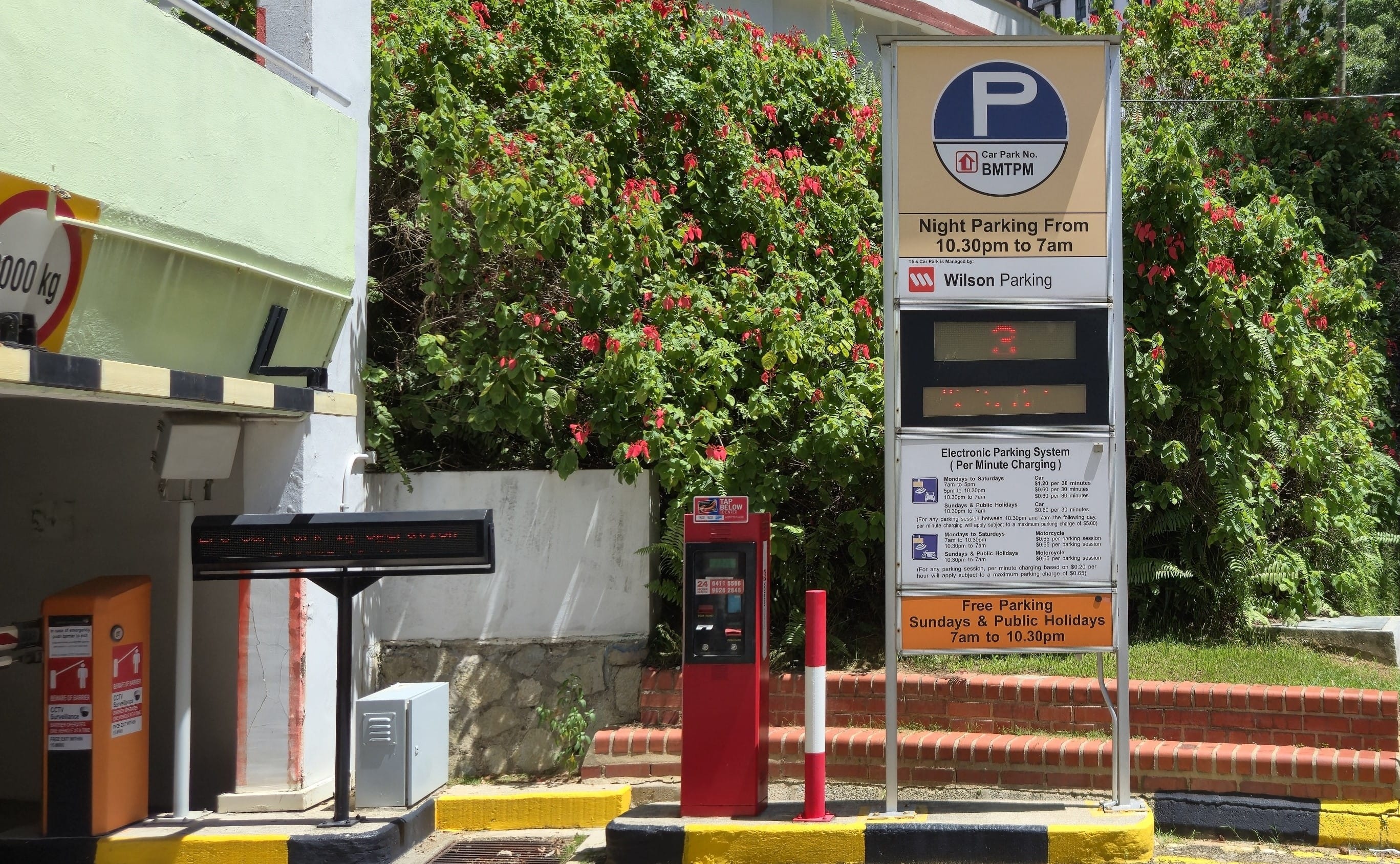
E-signages at an HDB car park.
Common Area Maintenance
HDB common areas are shared spaces for residents. Sometimes, Town Councils receive feedback that these areas:
are cluttered with bulky items left by residents; or
need repairs due to wear and tear (for example, damaged playground equipment, signage or fire hose reels).
For bulky items, the Town Council may check for ownership before removing and disposing of them. If the owner is identified, the Town Council will ask them to remove the items. If the issue continues, the Town Council may take enforcement action.
For maintenance issues, the Town Council will arrange repairs. In some cases, repair works may be carried out together with other scheduled maintenance works, and may therefore take more time to complete.
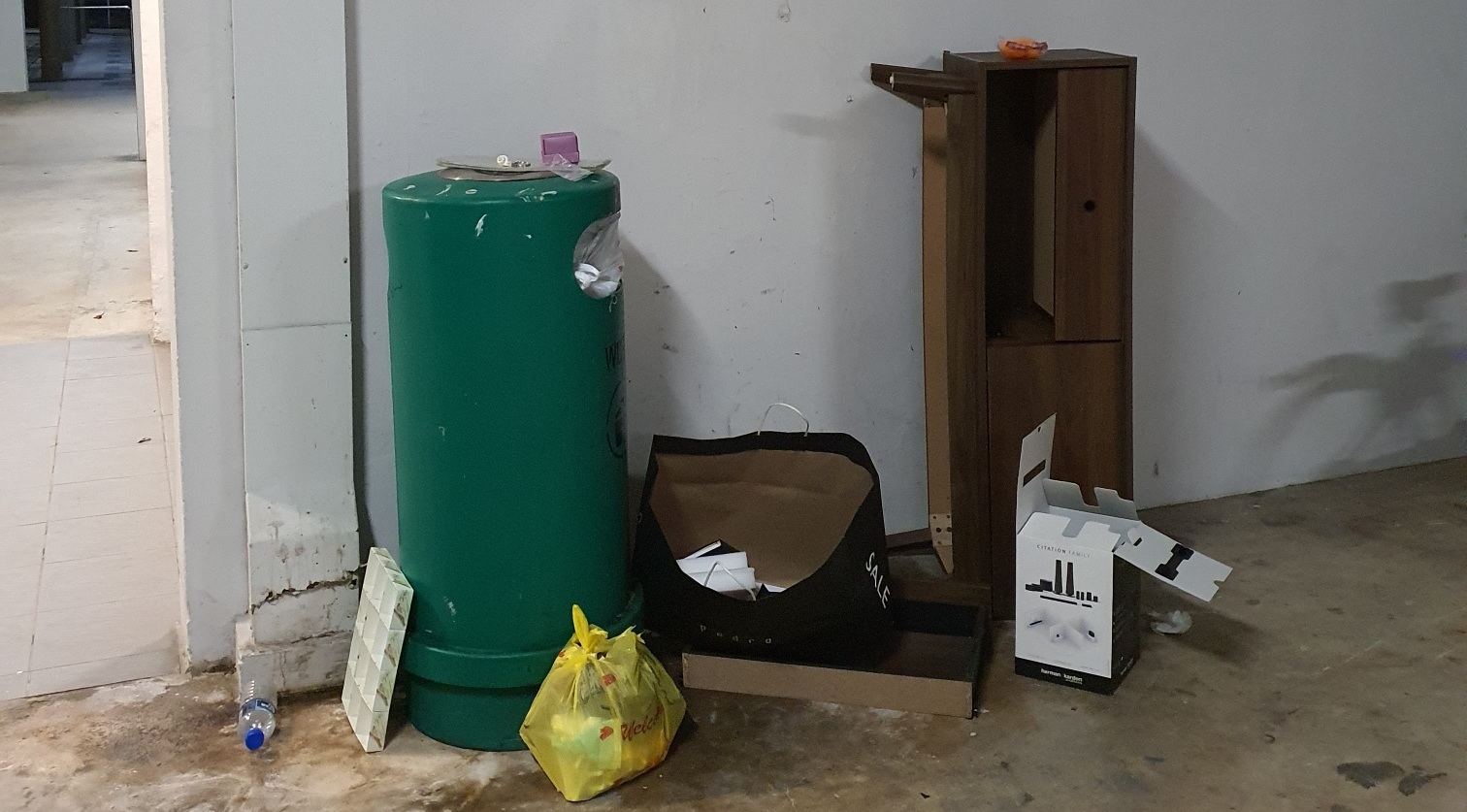
A common area cluttered with a bulky item and trash left outside a bin.
Lighting Maintenance
Lighting components may stop working over time due to wear and tear or electrical faults.
When lighting issues are reported, the Town Council will inspect the site. In some cases, a technician may be needed to check the lighting components to identify the cause of the fault.
Depending on the issue, the Town Council may repair or replace the lighting. Some parts may need to be ordered, which may result in longer repair times. In some cases, the lighting may also be upgraded to more energy-efficient options.
Repairs are carried out by contractors. In some cases, repairs may be carried out together with regular maintenance works, and may therefore take more time to complete.
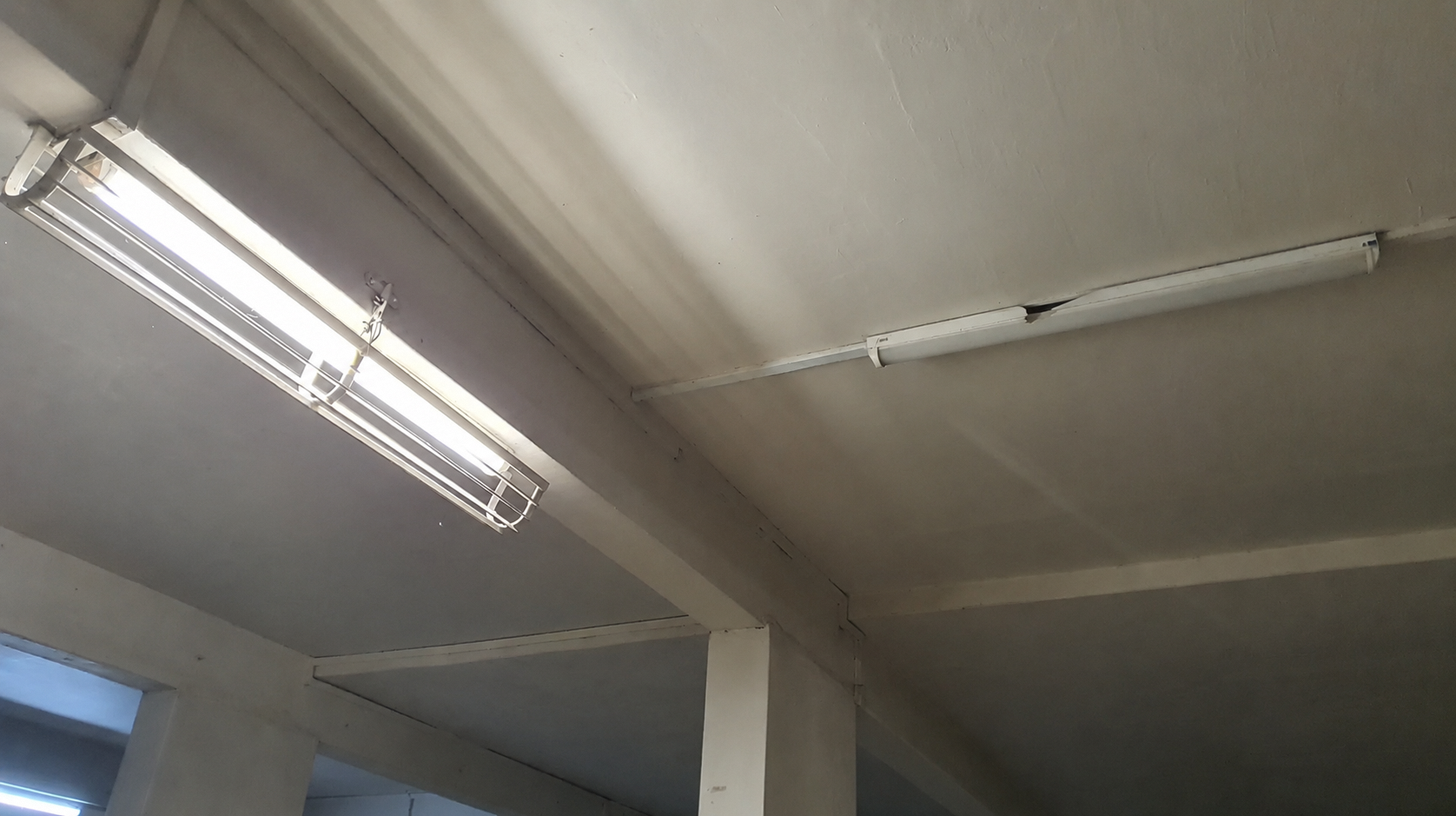
A tube light with a broken casing.
Footpath Maintenance
Footpaths can wear out over time, causing cracks, uneven surfaces or dips. If you notice an immediate safety hazard, such as a tripping risk, please call the Land Transport Authority (LTA) at 1800-225-5582, or the relevant Town Council if the footpath is located within an HDB estate. For less urgent feedback, you can report it via the OneService App.
After a report is made, the responsible party (LTA or Town Council) will inspect the site to assess the issue and decide on the appropriate follow-up actions.
Repairs will then be arranged. In some cases, works may be carried out together with other maintenance works, and may therefore take more time to complete.
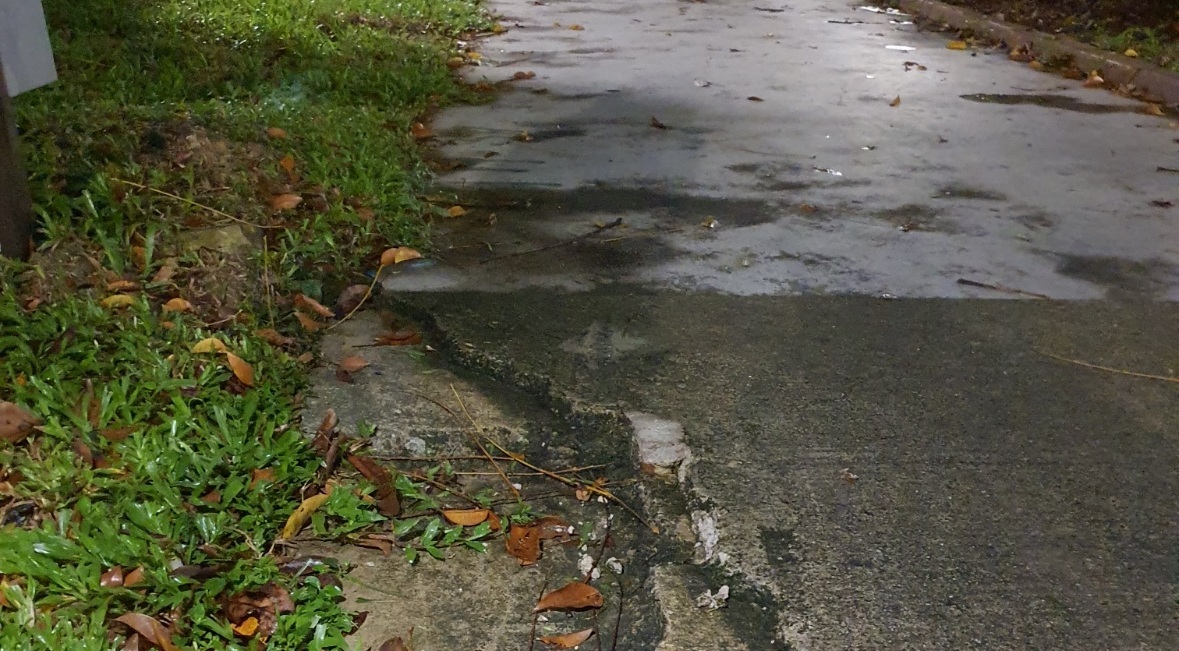
Damaged footpath with cracked concrete and uneven surface.
Bird-Related Issues
Bird-related issues may include pigeon feeding, crow nuisance, or noise from birds such as the Asian koel.
When feedback is received through the OneService channels, the National Parks Board (NParks) will assess the situation through site visits, monitoring, or surveillance, depending on the nature of the issue.
Feeding pigeons is an offence under the Wildlife Act. NParks may carry out surveillance to identify the feeder and take enforcement action. If you have information such as the timing of the feeding activity or the identity of the feeder, please share it with NParks to support investigations.
House crows are a non-native invasive species that may pose risks to public safety. Depending on the findings, actions may include removing food sources and nests, modifying the environment, or controlling the crow population.
The Asian koel is a native bird species protected under the Wildlife Act. It helps to control the house crow population in Singapore and may be noisier during the breeding season. As koels are often attracted to crow nesting sites, NParks may remove any crow nests found in the area. Tree pruning or fruit removal may also be carried out to discourage the presence of koels.

From left to right: pigeon, crow, and Asian koel.
If you have information on possible crow nesting sites or bird-related issues in your estate, you can report it via the OneService channels.